Tuesday, May 25, 2010

2000 vs 2010 – Major motoring transformations over the last 10 years

It was almost precisely 10 years ago that I picked up my first copy of a proper car magazine in July 2000 so I thought it would be an opportune time to go back and see just how dramatically things have changed since then.

All the observations I’ve made here are based on the July 2000 issue of CAR Magazine and I’ll start with a rather hilarious comparison. There was a glossy, double page spread of the then hugely popular Toyota Corolla RXi; the ad itself encouraged one to pay special attention to the gear lever which had 6 forward gears.


The very popular Corolla RXi had a 20-valve screamer fitted up front


An entire advert raving madly about the merits of a 6-speed manual gearbox… Sure, back then it was a first on a Corolla but today, the very same brand produces a little 1.3 litre Corolla with a 6-speed gearbox as well. Also, while back in 2000 “everything keeps going right”, today Toyota claims to “lead the way.” Times have changed and Toyota’s performance models have been disappointing of late, with neither the presence nor the power to challenge the GTIs and Type Rs of the world.


Looking at vehicle sales from May 2000, the Corolla and Conquest from Toyota indeed lead the way. The BMW 3 Series still outsold the Mercedes-Benz C-Class handily, an achievement it hasn’t been able to repeat regularly for many years.

The VW Polo, currently the top-selling car in the country and a continual top 3 seller, didn’t even feature in the top 10 back then. The hideous, gravelly-sounding but incredibly enduring Mazda Sting (essentially the old 323) and the Ford Tracer (essentially the Laser) also sold hugely.

The cheapest car that you could purchase in South Africa at the time was the Fiat Uno 1100 at a cost of R40 970.


Looks solid enough here, but it wasn't


The cheapest current vehicle on sale is the Chery QQ 0.8 TE at R69 900.

The same that applied to the Uno applies to the Chery QQ right now; rather buy second-hand and accept the fact that your car isn’t brand new. That way, you’ll also avoid blowing across the newly revamped Hospital Bend when the south easter decides to drop by for a visit.

Back then, Honda still produced both the Civic and Ballade models, both of which were laden with extreme bodily modifications almost before they could be driven off the showroom floor. The classic V-TEC was an invitation for a serious dice.


Today, only the Civic nameplate lives on in a far superior machine but one which is already too extreme in its standard design for owners to really hassle with much modification.


The final Honda shape to carry the Ballade name (above) and an example of the bodily abuse most of these cars were subjected to (right)


Porsche had a minuscule range of vehicles at the time. No Cayman, no Cayenne, no Panamera and fewer 911s all means that the variety of Porsche’s available now has more than doubled in terms of individual models.

In-car navigation systems made their entrance into the local market and today, such a system can be specified in a large number of cars, many from the lower classes. If that’s not enough, you can have an aftermarket system fitted to your vehicle at minimal cost in the blink of an eye.


Airbags were still an option on a vast number of vehicles while today, any car without dual front airbags for the driver and passenger as well as ABS braking is considered unsafe and with a dismal level of safety equipment!

A startling comparison is that Volvo is preparing an “injury-proof” car for release in 2020. It will be fitted with an electronic bumper that obtains vital information for hundreds of metres around the car.


Volvo's safety technology being developed for 2020


Using this information, the car will predict an accident and take measures to avoid one regardless of whether the driver lets go of the wheel and elects to twiddle his thumbs or not.


The future is going to be scary in its ingenuity and we had better buckle up for one hell of a ride.

Then again, the car will probably do that for us.

Wednesday, April 21, 2010

Jags with Swag

When Ford launched the Focus in 1998, this Golf-challenger singlehandedly revitalised the dwindling brand by introducing a mix of driving fun and design “edge” that had been missing since the earlier generations of the Escort and the classic Cortina.


The same phenomenon of a single model revitalising an entire brand’s reputation was seen with Mazda (when it launched the Mazda6) and Renault (with the Clio).


Jaguar is the latest brand to follow on from the simple principle that making better, more desirable vehicles leads to improved sales figures and boy, have they done so with aplomb!

You see, Jaguar as a brand has always been right up there with the best for street cred but for far too long, that was apparently enough. All their models were carbon copies of older designs and desperate attempts to milk the whole retro theme for all its worth.

In 2006, the traditional Jaguar rulebook (probably handwritten in ancient calligraphy on stained, yellowed paper) was angrily tossed out of the window and traded for some new age, 21st century thinking. The result was the fantastic Jag XK coupé.


It competes with Aston Martin for exclusivity and ability but costs far less.

While it’s still identifiable as a Jaguar, it also comes across as thoroughly contemporary and 4 years later, it hasn’t aged a bit.


Now, Jaguar has taken the standard set by the XK and come up with the jaw-dropping, svelte XF and XJ models. The XF was launched in 2008 and has already been lauded by numerous established motoring magazines around the world.


In essence, Jaguar has come from nowhere to surpass the mighty Mercedes-Benz E-Class and BMW 5 Series in terms of raw appeal.


One look at the XF’s interior will tell you all you need to know; it is a triumph of style and ergonomic efficiency and has been my favourite car interior since its launch.


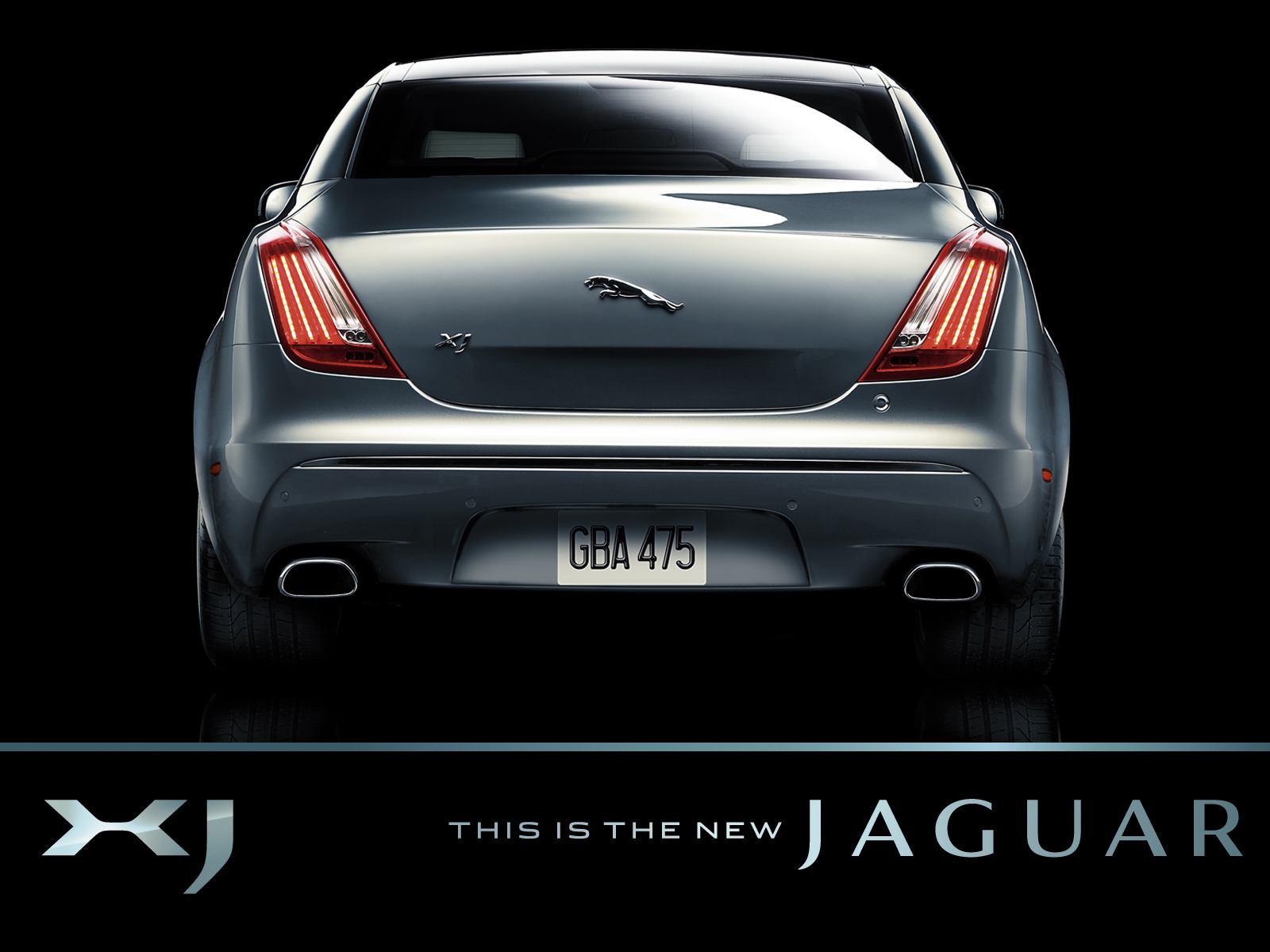
The brand new XJ, Jaguar’s flagship sedan which competes with the S-Class and 7 Series, is similarly contemporary in its execution.

Most impressive, and in stark contrast to the sombre Germans, is that each new Jaguar manages to carve its very own identity rather than being a larger or smaller version of other Jags. If you can tell an Audi A6 apart from an A8, chances are your eyes are in pretty good shape…


Sleek and clean... the all-new XJ


As you can see here, the XJ is as colossal as the Germans it competes with but somehow strikes a far more lithe and dynamic figure with those elegant rear lights being my favourite exterior design element.


The interior has a swathe of wood trim that wraps around its occupants and apparently makes one feel as though you’re “sitting in a Riva luxury speedboat.” Gorgeous.


Evidently, it’s possible to revolutionize an entire manufacturer’s image in the marketplace with the launch of just one, two or three well-conceived models.


Jaguar has rocketed up the desirability scale once more and I hope enough executive buyers out there realise it to justify the considerable effort that the Brits have put into these cars.

Friday, April 16, 2010

The BIG mini attack

The Mini Cooper has been around for a while now but its popularity shows no sign of dwindling. Its funky design, cool yuppie image, peppy performance and nimble handling have made sure it has stayed as desirable as ever.


So successful was the original redesign of the new Mini in the early part of the 2000s that the current shape - with its chrome accents, two-tone paintwork and sporty “wheel at each corner” stance - has changed little. Think of how Porsche design changes have remained evolutionary rather than revolutionary and you’ll get what I mean.

However, the Mini is about to have the niche in the market that it essentially owned populated by eagerly anticipated models from Audi (the A1) and Citroёn (the DS3).


The press kits from Audi and Citroёn will say something along the lines of “designed for young urbanites in need of something stylish, fun and techno-savvy” but actually, these two cars were designed solely to crash the Mini’s party.


Both cars arrive at opportune times for both manufacturers. Audi is riding a wave of success earned from the successful release of models such as the dramatic R8 and the slinky A5. Citroёn is currently enjoying a revival with the French manufacturer releasing a flood of new models which all have that unique brand of Citroёn quirkiness that’s been missing for way too long.

The reason Mini should be worried is that both these new cars, quite simply, look damn good. Striking lines are common to both and they’re loaded with the very latest gadgets.

Both also follow on from the Mini in being incredibly customisable, a clear indication of the younger audience that they hope to attract. An impressive example of this is the DS3’s roof which can be specified with a number of specially designed decals.

Also, whilst remaining compact in appearance, both the Audi and Citroёn are actually larger and therefore more practical than the Mini.

Apparently, adults can actually sit in the back seat as opposed to neatly folding themselves up in there. The DS3 should arrive in South Africa next month while the A1 will make its entrance early next year.

While both lack the irresistible iconic cachet of the Mini brand, they’re certain to instil more than a few nerves into the BMW-made hatchback.

The big Mini attack has begun and it’s going to be interesting to see if the Cooper’s grip on its segment of the market will remain as strong as the hugely entertaining way it grips the road.

Tuesday, March 23, 2010

“I love the way you drive; will you marry me?”


Cars have often been described as an extension of one’s personality but could it in fact be your driving style that’s the more accurate reflection of who you are?

I absolutely believe it is.

Recently, I met a guy at a braai and we got talking about road rage. He has done some pretty insane things on the road at various times like attempting to beat up a typically vulgar taxi driver.
As he chatted about his catalogue of dangerous escapades on the road, I didn’t deny that any of it was anything less than the absolute truth. The guy was cool and friendly, but he always looked on the verge of beating someone up as we spoke. There was a decidedly manic glint in his eyes.

My own driving style is aligned quite perfectly to my personality; hurried, impatient, easily unsettled and yet, never willing to cross the line (excuse the pun).
I will never jump out of my car to beat someone up (a decision easily made by my pitifully small and unthreatening size). I don’t tend to break the rules in everyday life, so I tend not to jump red robots or burst into the front of that endless queue of cars turning off the M5 as everyone from the southern suburbs scurry to Canal Walk…
I’ve also never gotten a parking ticket in my life. None of which means I don’t spend most of my time gritting my teeth while driving.

A colleague of mine is another prime example. A more feisty and impatient “dynamite in a small package” specimen you are unlikely to find. On the road, she and her trusty Citi Golf make for a lethal combination, creating gaps where there appear to be none. An adept multi-tasker in the office, she somehow combines driving with SMSing, changing her shoes and berating everything and anything that dare to slow down her not inconsiderable velocity.

My sister is cautious, considerate and vigilant on the road. Overall, a wise and measured approach to driving that mirrors her general approach to life.
Her husband, dubbed a fair bit OCD by the family, expertly navigates his way around potholes with the precision of an architect completing his final draft for a multimillion dollar construction.

One of my best friends is learning to drive and recently found herself driving in the lane facing oncoming traffic without realising it, despite the oncoming car barrelling down on her.
These and other bizarre transgressions on the road would be inexplicable were it not for her colourful, emotional, vivid, marginally haphazard and infectious personality.

All of these coincidences were really fascinating to me. The way we walk into a room, give a presentation, deal with a crisis or dress ourselves are all influenced by personality and now, we can add driving style to that list.
Consider your own character and the way you drive and you may be startled by the similarities.

Maybe next time you’re on a first date, start off by taking him or her for a drive and hand them your car keys.
That should save you from having to figure them out over a laborious and awkward two-hour dinner date.

Monday, March 15, 2010

More time to fail


The South African transport department announced on Monday that learner’s licences will now be valid for two years instead of the previous 18 months.
The department also saw fit to extend testing hours for driver’s licences to 5pm on Saturdays and from 7am until 1pm on Sundays.

All of which should be great news. After all, the process for acquiring your driver’s licence in this country is renowned for its incredible inefficiency.

Well, I’m of the opinion that these latest announcements are actually rubbish and an admission of a serious fault.
The transport department is in fact saying that the service they’re currently offering is so poor that 18 months is too little time to get your driver’s licence and that you need at least two years - factoring in a few laughable failures along the way - to get that plastic card with an awful black and white image of you plucked on it.

These new time extensions don’t address the fundamental issues pertaining to getting your licence. The primary one is K53, the “defensive-orientated” style of driving that we’re all taught and that’s apparently the safest.
It is nothing more than a style of driving designed to make you fail. Checking blind spots every 8 seconds, reversing like a fool while surrounded by poles, pulling up your handbrake constantly and generally frustrating the hell out of all other drivers doesn’t constitute safe driving.

It is obvious that everyone stops using K53 immediately when they pass their drivers test. I failed twice and the first time, the vastly overweight cop that angrily failed me and drove me back to the testing centre certainly didn’t do his observations.

Consider this; I have 3 close friends who have all fallen victim to our driver testing system. Add me to the equation and we’ve failed a combined 14 times. Driving lessons are now something like R150 each. It’s R100 just to apply for your test if memory serves me correctly.
My point is that we’ve spent a revolting amount of money desperately trying to get our licences. How less fortunate people without the luxury of repeatedly trying over and over again are able to cope is beyond me.

Driving tests need to be adjusted to in fact be a test of basic driving skill and the ability to control a vehicle rather than a series of convoluted procedures and rules one has to follow.

Until then, no amount of misguiding government talk will stop me from believing that more time to fail your driver’s licence is really all we’ve been offered.

Monday, March 1, 2010

The Last Citi - A final goodbye

There comes a point in time when you eventually have to replace all your favourite things in the world.


That pair of 501 Levi jeans that you’ve worn for a decade has faded so much that it makes Nicole Kidman appear warm and inviting. Your Nokia’s 1.3 megapixel camera just isn’t cutting it anymore when you’re snapping away at your bored colleagues on a lethargic Friday afternoon. Your All Stars can only survive so much club-hopping and stomping around Canal Walk before the sole wears away and the white band at the side detaches itself from the material of the shoe… a deeply depressing affair that many of us have no doubt encounted.


Pretty much everything has a life cycle, and so too do cars. The Audi A3 you see today will be replaced by a new model next year. The much-loved, current model VW Polo has been around since 2002 and will be replaced imminently.


These life cycles last as little as 5 or so years for more common models and up to 10 or more for more classic, exclusive models such as the new Beetle (funny that we still call it the “new” Beetle when it has been around for so long).

How then, has the Volkswagen Citi-Golf managed to stick around for almost 30 years? How many things can you think of that were designed 30 years ago that still hold appeal today?

The evolution of an icon

Frankly, I’m relieved that the Citi has passed on. Constantly changing trends, advances in technology and a far greater emphasis on safety means that this blocky hatch has for too long been way overpriced compared to what’s available out there.


Sure, the Citi still has character aplenty and is nippy and fun to abuse over a series of bends. It is also inexpensive and easy to maintain. These factors, as well as VW’s never-ending improvements to the range and several really brilliant marketing campaigns over the years all account for the model’s continued success.


But I am a believer in modern design and technological prowess. If you’re willing to be seen in a Kia, then a Picanto kills the Citi in almost all aspects. It looks great and the indicator lenses don’t look as though they’ve been screwed on in somebody’s garage.


The Picanto’s doors are actually thicker than a page, in stark contrast to the Citi. It is also far safer and will very likely save you an extra limb or two in the chance of an accident (the latest Citi-Golf’s were fitted with a driver airbag, fairly useless when the rest of the car will come crumbling down around you).


More importantly, the Picanto doesn’t encourage grossly offensive modifications in the form of oversized spoilers, wheels so large that the tires mate regularly with the bodywork, suspension so low that you can’t live in an area with speed bumps and filters / exhaust systems so noisy that they, well, make you look like an idiot.


The Citi Mk 1

Despite all that, I won’t deny that the Citi is an integral, if flawed, component of South African motoring culture. Many keep going for years and years. Labels such as Chico, Citi Life, VeloCiti and the famous, 1.8-litre CTi from the 90’s will never be forgotten. People fall in love with these cars in the same way those that bought an E30 325iS BMW do.


One can’t attach a price to such emotion and nostalgia. So if you’re lucky enough to have purchased one of the final 1000 Citi-Golf’s dubbed the “Mk 1”, know that you’re driving an irreplaceable, iconic piece of motoring history.