Friday, September 17, 2010

A Trip Down Memory Lane: 1984 Mazda 626 SLE


I think most car fanatics can trace way back to the very first cars that caught their attention; for me, it started when I was just 3 with my mother’s E23 BMW 728i – of course, I was just 3 and it was nothing more than a big, white, amazing beast that I didn’t know too much about.

Two years later, however, and I was already noticing features on cars and picking up bits of detailed information about them that no kid that young had any business doing.

This brings me to a sunny Sunday afternoon in the early nineties. I think I was about five years old when my parents took me along to test drive one of the cars that was largely responsible for igniting my passion for all things motoring.

You may be surprised then, to know that the car in question was an ultra-conservative, beige-hued 1984 Mazda 626 SLE. It certainly didn’t look like much and was pretty much your typical Japanese sedan – a promise of much reliability but not much to stimulate the adrenal glands.

Mazda also produced coupe and hatchback versions of the '80s 626


This Mazda, however, was an amazing car (by the way, my parents were smitten with the thing and quickly banished any thoughts of the alternative, a Ford Sierra 2,3 GLE) for a number of reasons.

It was the range-topping SLE, automatic model (my mom only ever drove an automatic, being convinced that all manuals were rubbish and the work of the devil) and it served as the family car for around seven years.

We were a family of six and we spent much of that time living on a virtual farm off a terrible dirt road in the Southern Suburbs. Needless to say, CA 378-318 didn’t have anything close to an easy life.

My dad’s carpeting business at the time meant that the boot was always filled to capacity with carpet samples.

But it is the features fitted to this dogged Mazda that amazed me. It sang a little song at every available opportunity: one when the boot wasn’t closed properly, one when a door hadn’t been closed and one when the fuel level dropped down too low.


Bizarrely, I still remember the exact tune of each warning jingle to this very day...


The SLE came with air-conditioning, power steering, often-faulty central locking, electric windows and mirrors, an alarm clock (taking the grand total of tunes inside the car to a stunning four!) and by far my favourite feature, electrically moveable air vents!

These amazing vents moved on their own from side to side, very effectively circulating air around the vehicle. I thought – and still think – they’re an amazingly practical feature and I don’t understand why no other manufacturer seems to have caught on.


Sadly, in the latter half of the car’s life, use of the air conditioner resulted in all kinds of mechanical shudders so the electric vents soldiered on only as a party trick.


Then, there was the driving experience. Of course, I never got to drive it myself (although I did mischievously start it up when my mother ran into a florist one day…) but my parents both maintain it was one of the easiest, smoothest cars they’d driven. This, despite us having owned quite a few BMWs back in the day.


The 626 had a 2,0-litre, carburettor-fed SOHC motor mated to a 3-speed auto. Archaic by today’s standards, but the car itself was really nippy for what it was.


By the end of its tenure with us, it had accumulated well over 300 000kms, scraped its bodywork on the nasty 15-inch rubber we fitted to it countless times and showed some signs of rust.


But like so many cars that appear absolutely ordinary, this Mazda had a certain inexplicable spark about it and ever since, I have harboured a soft spot for the brand that has Zoom-zoomed its way to making far smarter, sleeker and faster cars.


None of which are fitted with the SLE’s quirky electric air vents…

Friday, August 27, 2010

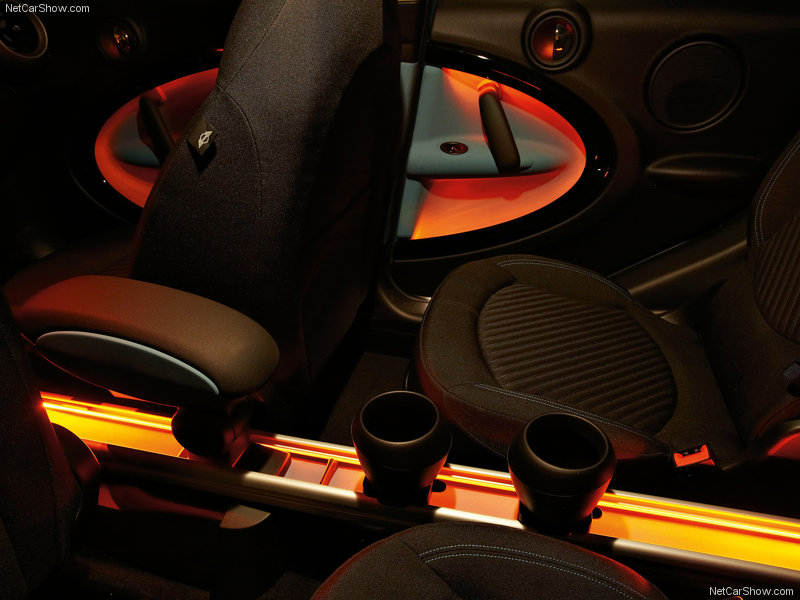
Spaced-Out: Mini's Curiously Addictive Countryman

The Mini range isn’t quite so mini anymore – whereas the original reinvention of this icon extended to just the Cooper and Cooper S hatchback models, today one has the option of a convertible and the Clubman variant (a distinctive if not entirely successful attempt to make the Mini more practical).

But by far the most interesting model is the new Mini Countryman. While the new name generates awkward images of endless fields, cowboy boots and dust, the reality is that this new addition to the Mini stable is a lot cooler than all of that.

It is the first Mini to provide genuine accommodation for four occupants as well as a boot area that no longer restricts shopping sprees to a loaf of bread and a carton of milk (not much more fits in the boot of any other Mini).

With its raised stance, optional four-wheel drive system and a toughened-up exterior, the crossover Countryman is defined as a compact SUV.

In lamens terms, what it means is that prospective Mini customers drawn to the allure of driving pleasure and yuppie looks offered by the brand but equally turned off by the lack of space and practicality, can now have both.

In the meantime, here are a couple of pictures of the new Countryman in all its spacious glory.


Wednesday, August 18, 2010

Driving the Nissan Pathfinder 4,0i V6


I got to take the high-spec, 7-seater 4,0i V6 automatic model for a drive to see if Nissan’s claims of improved interior quality, tweaked styling and additional standard equipment were worthwhile or not.

It remains a sharp looker with features such as ex
tensive brightwork, new alloys and a revised bumper and bonnet adding to the aggressive image. The usual butch SUV addenda such as sporty roof racks and running boards add to the appeal. Privacy glass (and trust us, there’s a lot of it here) further contributes to the macho appearance.

But at a not inconsiderable R528 800, the 4,0i V6 m
odel will have to impress inside as well. The quality revisions provide a more comfortable environment but fit, finish and perceived quality are not entirely faultless; the passenger airbag cover is ill fitting and some plastics on the centre console were already scratched…
While many S
UVs can be forgiven for some rough finishing, at the Pathfinder’s price one might expect more.

Still, electric and heated leather seats and good space (up front) make spending time in the Pathfinder’s cabin rather pleasant. Ergonomics are good and switching between driving modes (should you elect to venture off-road) is made simple by a dash-mounted switch.

The revised instrument cluster is classier and, thankfully, Niss
an has bucked the trend of doing away with the temperature gauge. A Bose Premium Sound system provides good sound reproduction and comes with nine speakers.

A new info-tainment system featuring a 40GB hard drive, touch screen, Bluetooth and satellite navigation is an optional extra and adds R25 000 to the base list price.
Passengers in the second row are well provided for with map lights, an armrest and ventilation outlets, compensating somewhat for the slightly cramped feel when taller passengers are sitting in front.

Third-row seating is, as expected, better suited to kids – getting into them isn’t the most elegant of maneuvers, either. Unlike the Ford Everest, the Pathfinder is fitted with a folding parcel shelf to keep valuables out of sight.

However, folding this piece of equipment up in order to raise the two rear seats is not the simplest of tasks.
Luggage capacity is a commodious 432 litres when the third row of seats is folded down. Safety has also been enhanced, the Pathfinder now boasting side and curtain airbags. With a 4,0i V6 up front, this particular Pathfinder should make for a spirited, if thirsty, drive.

While the big six hasn’t been upgraded (the diesel version gains increased power and torque outputs) it didn’t have to be.
It remains a silky smooth motor with a refined growl accompanying the substantial thrust on offer.

Producing 198 kW at 5600 r/min and 385 N.m. of torque at 4000 r/min, it doesn’t need to be revved all that high for rapid progress.
Claimed performance figures include a 0-100 km/h time of 8,8 seconds and a top speed of 190 km/h. The 5-speed automatic transmission can be a bit slow to kick down, but it also comes with a manual mode operated by flicking the gearlever to the left.

Even with some visible play in the rack and pinion steering, especially around the straight-ahead position, the Pathfinder is nevertheless easy to hustle for such a large SUV. Cruising comfort is good with only harsh bumps affecting the separate ladder-frame chassis set-up’s composure. NVH appear to be well controlled, the big Nissan doing well to isolate passengers from the outside world.

All in all, the latest improvements combine to keep Nissan’s Pathfinder fresh and in touch with the competition – competition that isn’t immediately easy to discern, however.
The Pathfinder finds itself up against everything from Toyota’s Fortuner (a huge sales success thanks to its outstanding value) to Jeep’s Grand Cherokee.

For those seeking a powerful leisure SUV with all the bells and whistles, standout looks and enough space for the family, the Nissan remains a decent – if expensive - choice.

Sunday, August 8, 2010

2010 Launch Preview

We’re now officially into the latter half of 2010 but there are still five months remaining for motor manufacturers to bring in the new decade with a bang. Five months left to capitalise on a passenger car market showing some really positive growth in recent months.

So, let’s take a quick look at some of the most significant new vehicle launches in the coming months.


Volkswagen Amorak (thumbs up)


It’s curious that a company the size of Volkswagen has taken this long to tap into the local market demand for big single/double cabs. After all, Toyota’s Hilux mostly trumps the Corolla / Auris on the monthly sales charts.

There is simply a huge demand for something rugged, dependable, big and with enough luxury to transport the family in comfort.

The Amorak instantly gets a thumbs up from me for looking far classier than any of its natural competitors. It’s also said to be brilliant both on and off-road.


Nissan Micra (thumbs down)


The Nissan Micra has always been a decent runabout with good engines, a neat cabin and some good ol’ Japanese reliability.


The previous model was too girly and limited in its appearance, though. So one would assume that the new, 2010 version would look, well, better. Small, modern hatchbacks are either really sharp and aggressive (Mazda2, Ford Fiesta) or classy (VW Polo).


The new Micra is neither and looks more dated than its predecessor, making the fact that it has a new CVT gearbox with “30% less friction than other CVTs” – as well as any other attributes to its new design – irrelevant.


Audi R8 Spyder (thumbs up)


The Audi R8 remains the single model from the house of the four rings that make it hard for diehard Beemer, Merc and even Porsche fans to not take a second look.


The Spyder / convertible version of the awesome R8 sees the solid roof of the “normal” model cut off so that petrol heads can now make mincemeat of Aston Martins and also have the wind blowing through their hair, assuming they have any left.


The Spyder will come with all the requisite convertible add-ons such as a pair of roll-over safety bars and a strengthened chassis. Thankfully, this Iron Man 2 car star will maintain the use of the V10, 5,2-litre masterpiece that shares much with the one found in the Lamborghini LP 560.


Citroёn DS3R (thumbs up)


The DS3 has caused a stir since its launch with its striking looks but is set to really take the fight to the Mini with the DS3R. The “R”, of course, signifies “Racing” and that this version of the DS3 will be fitted with a powerful, turbo-charged 1,6-litre motor.


Add a bit of carbon-fibre sporting bits here and a beefed-up braking and suspension system there, and Citroen should have few problems selling all of the limited number of DS3R models being produced.


Audi A8 (thumbs down)


Just launched is Audi’s new flagship, the A8. It is of course an immense machine and will showcase yet another level of mind-blowing tech, refinement and LED daytime running lights made famous by the manufacturer.


Sadly, I don’t see this A8 doing well once the fanfare if it being new wears off. It just doesn’t have the presence and character required from a grand saloon and found less-than-sparingly on the 7 Series and S-Class. I haven’t even mentioned the Porsche Panamera and Aston Martin Rapide, both of which have shaken up traditionally expected design standards in this class. Come on Audi, give the A8 some R8-like menace already!


Other exciting models worth looking out for and still to be launched in 2010 include Alfa’s long-awaited replacement for the 147 - the dramatic Giulietta. Also coming soon is the mammoth Mercedes-Benz S-Class coupe and for the many of us without access to ridiculous sums of money, Fiat’s attractive Linea will receive a much-needed power boost in the form of the T-Jet model.

And now, a special mention needs to be made for the Mercedes-Benz SLS. You would no doubt have seen a few pictures of this beast with its innovative yet iconic Gullwing door design.


It is a car that makes the notion that Mercedes-Benz was once the maker of staid and emotionless machines almost unthinkable.

The SLS is now unavailable in the country - unavailable, because only a select few of us will be able to afford the R2,4 million rand price attached to what must be considered a modern design classic.


That wraps up the highlights of what motoring fans and buyers can look forward to in the car market for the rest of 2010.

Thursday, July 29, 2010

When to visit the traffic department


Yesterday, my mom had to mission to Hillstar Traffic Department in Ottery to renew her driver’s licence. Bearing in mind that she hadn’t occupied the driver’s seat of a vehicle since I got my licence 4 years ago, I found it all quite amusing.

Still, I knew from experience that she was in for an afternoon of incredible frustration. No traffic department is complete without long, smelly queues of people, a tattered chair here and there, a limited supply of the precious writing tool called the pen as well as a compliment of staff that look painfully bored and disinterested.

As expected, my mom sat in a long queue up until around half an hour before the department was due to close at 15h30. She had moved at a glacial pace up until that point and didn’t expect to finish in time.

Then, the miraculous happened.

The queue began moving along at ten times the rate it had been all day. Like clockwork, eye tests and fingerprint-taking were conducted efficiently and without fuss.

In a flash, my mother was out of there.

Now, it doesn’t take a mastermind to figure out what the deal was. The reason it takes so long to get yourself in and out of these dreadful government departments is down to a complete lackadaisical effort by those expected to assist you.

As soon as home time approached, the staff kicked themselves into gear and got the job done as it was meant to be; namely, with some bloody vigour!

Sadly, it seems all one can do is avoid the traffic department unless you absolutely have to visit one and when that time comes, be sure to sneak in 30 minutes before it shuts its doors.

Wednesday, July 14, 2010

The world cup on wheels

The world cup has finally reached its dramatic conclusion. Spain has lifted the trophy for the very first time and most of the colourful foreigners who visited our colourful shores have by now headed home.

It was a truly magical spectacle, the likes of which this country won’t see again for ages. But this is a motoring blog and I am meant to be writing about cars, not vuvuzelas, drunken fans and stadiums with names that nobody from Spain or the Netherlands will be able to pronounce.

The role played by cars and public transportation in this world cup has been nothing short of incredible. In a country often slated for its aby
smal public transport network and poor drivers (and rightly so, to be perfectly honest), the issue of traffic congestion was remarkably well-handled.
At work, the office was filled with dread for months before the first match was played – “how
would we get to our studio in town? Should we carpool? Whose place should we sleep over at? What time should we leave home? Which roads will be closed? We’re going to dieeeeeeeeeeee!!!!!”

Actually, we were perfectly okay. An extra hour or so of forward-planning was all that was required to negotiate a trouble-free path through town.
The shuttles and new MyCiTi busses provided to transport stadium spectators on match days and in and around the city were smart, readily accessible and extremely efficient.

The MyCiTi busses are bigger and more comfortable

The public were generally well warned about road closures and there were no horror stories horrific enough to bother harping on about.

Perhaps traffic being dramatically stopped at the most impossibly awkward spot on Hospital Bend to allow the France bus and its entourage to pass deserves mention as a poorly executed traffic situation.
But what really is worth harping on about were those Dutch fans.

They were hard to miss, what with them being draped in the colour of everybody’s favourite flavour of Fanta – and the fun did indeed find these diehard football fans wherever they went. Even more bizarre were the throngs of Dutch fans crisscrossing provinces in their massive convoys. These were made up of all mode of transportation; I’m talking about motorbikes, camper vans, 4X4s and even double-decker busses. If these grainy pictures don’t do this citrus spectacle any justice, then have a look at this short clip: http://www.youtube.com/watch?v=uVZozy_hULI


Private vehicles were also used by many to brandish their support for Bafana with mirror socks and flags attached to windows, antennas, roof racks and virtually any part of the car it could affix itself to.
Hilarious were the vastly differing prices these mirror socks could be purchased for – I’ve heard about people paying everything from R50 to R150. No doubt street vendors had a good chuckle each time t
hey made a nice profit but well done to them for being visible on every single street corner - or every piece of tarmac where a vehicle could potentially slow down to a halt.

Mirror socks... the right way up

The flags caused some further drama, however. Initially, many were seen placed upside down on cars, apparently a symbol of “unrest” and “crisis” in the country to which the flag belongs.
Many radio stations took calls from people in their own crisis upon spotting these offending flags when, actually, the innocent lady in her little Yaris was only trying to demonstrate her patriotism and nothing more.


The wealthy also came to the party – many Mercedes-Benz drivers concealed the shiny-lensed indicator repeaters fitted to their rear-view mirrors just to display those mirror socks. While I’m at it – who decided to place indicator lenses within rear-view mirror housings? Flashy, sure. But extravagant, likely ridiculously more expensive to replace and far more prone to damage than traditional lenses placed on the side fenders. Form over function – simple.


What about the trains? It was a great experience to travel home on a packed train at 2am in the morning! Cape Town station has been completely transformed, and one can only hope it stays that way.
These improvements, along with the knowledge that the M3 now packs approximately 12 lanes (at my last attempted count) and Greenpoint has been fitted with a pretty traffic circle, lead us all to hope that it’s the catalyst Cape Town and South Africa needs to launch the road and transport network in South Africa another few notches up the scale.


Last but not least, it should be mentioned that the level of visible law enforcement on our roads was at an all-time peak. Well done to all the traffic officers (and their new, luminescent, LED, blinding blue lights) for doing a great job of keeping everything going smoothly and with mostly minimal fuss.

World Cup 2010 was a true triumph – both on and off the road.